
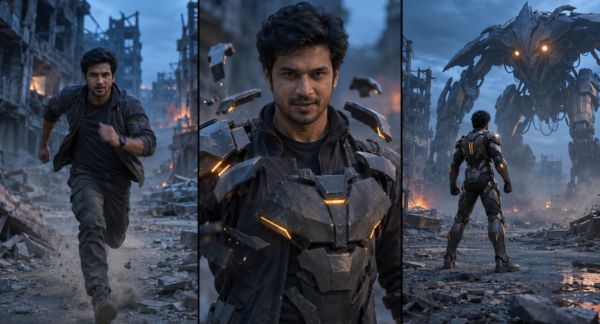
For one RepuNEXT TV experiment, an ordinary host became the hero of a fight against aliens. The reel showed a ruined city, a dramatic suit transformation and a final battle against a huge mechanical creature. It was made to entertain, but it also demonstrated something useful about AI action-video workflows. Instead of treating the whole fight as a single complicated instruction, the scene was broken into distinct moments. That gave the team a clearer way to plan the action and choose which visual beats needed the most attention.
Start With a Sequence, Not Just a Spectacle
The first section involved running through a damaged street, escaping danger and moving into combat. That establishes a reason for the later action. Without a beginning, even the most elaborate explosion can feel disconnected. For AI video generation, planning a short sequence helps keep each prompt focused. One clip may handle running. Another can show a close-up. A third might deliver the turning point. Separate clips are easier to review than one request that asks for every camera angle and every action at once.
Making the Transformation Feel Earned
In the reel, the central character changed into a futuristic battle suit before facing a larger enemy. The visual transformation was a key moment, so consistency mattered. A creator needs to pay attention to colours, costume details, body position and the direction of movement between shots. If those elements change without explanation, the transformation loses its impact. Sound design can help connect the moment: a short pause, a mechanical sound or a shift in music tells viewers that something important has happened.
The Boss Fight Needs a Clear Finish
The final sequence brought in an enormous opponent with glowing eyes and a heavy physical presence. Large-scale battles look exciting, but they can become confusing when the camera moves constantly. A strong ending benefits from a few readable steps: show the threat, show the hero’s response and make the final action clear. It also helps to avoid hiding every movement under effects. Viewers should understand how the confrontation ends. The reel’s combination of action and a final decisive moment gave the experiment a complete shape.
Why This Matters for Small Video Teams
An alien fight may not be a typical client project, but the same planning method works for product stories, dramatic introductions and short branded videos. Build a shot list, create brief sections, review character consistency and edit around the best material. The RepuNEXT TV team used Higgsfield AI to explore a playful idea that would normally need extensive visual-effects work. The broader lesson is simple: imagination can start the project, but clear sequencing is what helps the audience enjoy it.