
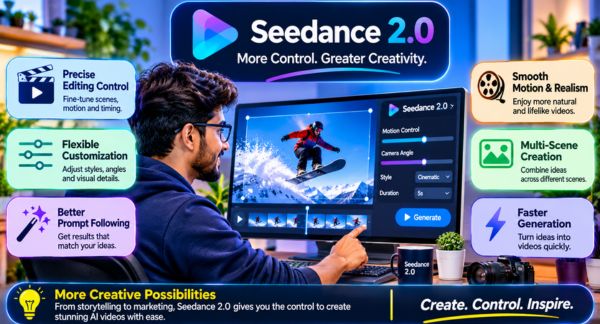
Creators often have a clear scene in mind but struggle to turn it into a usable video. This one is worth examining on its own terms. The story of Seedance 2.0, however, becomes more interesting when we look at everyday use. ByteDance’s Seedance family explores generated video with coordinated visual and audio elements. Rather than focusing only on dramatic demonstrations, it helps to understand the people, decisions and practical problems involved. That gives readers a clearer starting point for judging what matters.
How Seedance 2.0 works
The first step is to see what happens behind the scenes. ByteDance’s Seedance family explores generated video with coordinated visual and audio elements. Its place in the bigger picture depends on how consistently this process works. A name on its own cannot explain whether the experience is genuinely useful. A clear account should show both the expected result and who has to verify it.
From an idea to everyday use
A creator could plan a scene using characters, movement and sound as parts of one brief. The example also brings the discussion closer to familiar routines. Whether it works well often depends on the conditions around the user. What looks effortless in a presentation can be more complicated during everyday work.
The most useful possibilities
Storyboarding becomes more flexible when videos can be revised through references. Small everyday gains may matter more than a single dramatic demonstration. Businesses may discover better ways to respond to the people they serve. A strong claim is only useful when people can repeat the outcome. The right question is whether it solves a recurring problem without creating a more difficult one elsewhere. That perspective keeps the conversation tied to experience rather than promotion. Before accepting a broad claim, check its scope, intended audience and any stated conditions. Small distinctions can change what a result actually means.
Complex action may still introduce continuity or realism problems. The strongest explanations make it clear where documented features end and predictions begin. Readers should watch for the gap between a prototype and a reliable public release. Sensitive situations call for extra attention to accuracy and accountability.
A measured conclusion
The conversation about Seedance 2.0 is likely to keep evolving, but a sensible first question remains the same: who actually benefits? Look for examples that show what changes for the user, not just which new feature has arrived. Pay attention to the gap between a product announcement and a routine someone can repeat. That distinction makes it easier to decide whether a development deserves further interest.