
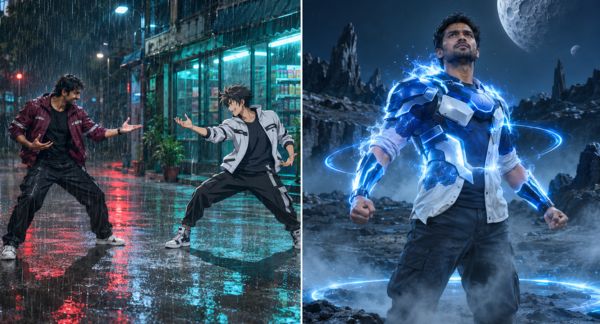
The second Freepik reel moved beyond announcing a feature. This time, the RepuNEXT TV team used AI video generation to create a short action experiment. It brought together a rain-soaked anime-style street fight and a superhero transformation on a battlefield. Those scenes look very different, yet both depend on a similar skill: turning separate visual ideas into a clear sequence. The point was not to prove that AI can replace a film crew in every situation. It was to see how far a small creative team could push an imaginative concept using available tools.
Building a Fight Across Different Styles
The street-fight sequence mixed an animated character with a live-action-looking colleague. Movement, contact and perspective are especially tricky in this kind of scene. A kick only feels believable if the characters appear to share the same physical space. Their shadows and scale need to make sense, and the action should carry through the cut. When one character looks animated and the other looks real, the contrast can be part of the appeal. It also gives editors more continuity problems to solve. Short, focused shots make those issues easier to spot.
Then the Story Takes a Superhero Turn
The second scene shifted to an alien battlefield, where the host transformed into a glowing, powerful character. This change allowed the team to move from grounded action to something much larger. Transformations work best when the viewer can recognise the person before and after the effect. Costume colours, face details and the direction of the character’s movement all help create that connection. A dramatic visual burst may hide small errors, but the audience still needs to understand who is on screen and what they are trying to do.
Why Prompts Are Only Part of the Process
The reel invited viewers to ask for the prompts and workflow, which reflects how curious creators learn these techniques. Yet copying a prompt will not always reproduce the same output. Reference images, model versions, settings and repeated attempts can change the result. It helps to keep notes on what worked and where a clip failed. A simple shot list is equally useful. Before making the next scene, ask whether the current one gives the audience enough information to follow the action.
The Fun Comes From Experimenting
These scenes were made with a playful spirit, and that is part of their charm. AI tools can encourage teams to try concepts they might otherwise leave in a notebook. The best approach is to start small, accept that some outputs will be unusable and keep improving the sequence. A completed minute of action is built from many creative choices. Freepik and Seedance can help supply visual material; the timing, humour and storytelling still come from the people putting it together.