
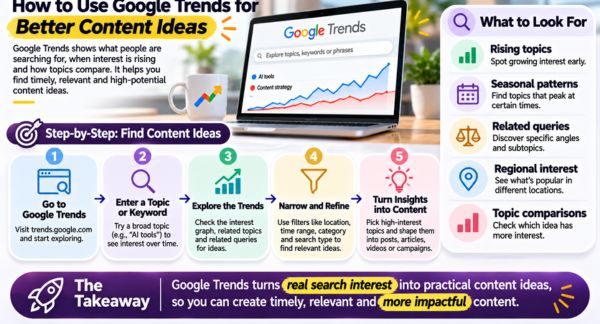
Google Trends can show when interest in a subject rises, but it cannot tell the whole story. Their differences emerge in use. The story of Google Trends, however, becomes more interesting when we look at everyday use. Google Trends displays relative interest in search queries across time and places. Rather than focusing only on dramatic demonstrations, it helps to understand the people, decisions and practical problems involved. That gives readers a clearer starting point for judging what matters.
What sets the idea in motion
The practical starting point is the problem being solved. Google Trends displays relative interest in search queries across time and places. Its place in the bigger picture depends on how consistently this process works. It helps to see the process in action before making a judgement. It also helps to know what information goes in, what result comes out and who checks it.
An example that explains it
A blogger can compare topic seasonality before planning a publishing calendar. What matters is whether it solves the problem someone actually has. A first-time user and an experienced professional may need very different things. Routine use introduces constraints that short demonstrations rarely show.
Potential benefits for people
It helps identify audience curiosity without replacing keyword research and customer insight. Small everyday gains may matter more than a single dramatic demonstration. For organisations, the impact may be just as much about workflow as technology. Any such benefit still needs to hold up during regular use. That perspective keeps the conversation tied to experience rather than promotion. Before accepting a broad claim, check its scope, intended audience and any stated conditions. Small distinctions can change what a result actually means.
Relative search interest is not the same as absolute search volume. Checking the official explanation against hands-on tests is a good starting point. An announced feature is not always available to use immediately. High-stakes uses deserve closer scrutiny before anyone depends on a result. An informed decision leaves room for uncertainty instead of assuming that a polished video settles every question.
The takeaway for everyday users
The conversation about Google Trends is likely to keep evolving, but a sensible first question remains the same: who actually benefits? Look for examples that show what changes for the user, not just which new feature has arrived. Pay attention to the gap between a product announcement and a routine someone can repeat. That distinction makes it easier to decide whether a development deserves further interest.