
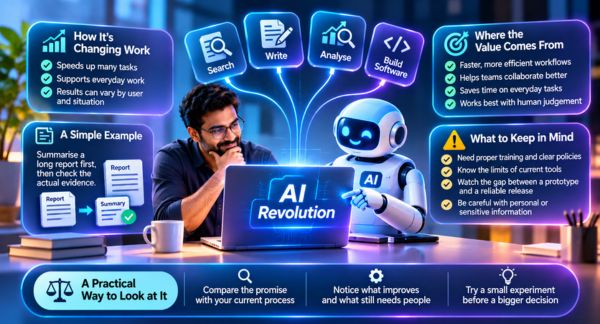
AI is changing jobs in uneven ways. Some tasks become quicker while others still need people throughout. This one is worth examining on its own terms. With AI revolution, small details often explain more than the biggest claims. The current wave of AI changes how people search, write, analyse information and build software. This matters because people may encounter the subject through a short video without receiving the context behind it. A closer examination can separate the actual idea from assumptions that have grown around its name.
The essentials without jargon
The current wave of AI changes how people search, write, analyse information and build software. Different users may get very different results, even when they are working with the same tool. A name on its own cannot explain whether the experience is genuinely useful. The details of inputs and outputs can reveal whether a tool fits the intended task.
An employee might summarise a long report before checking the underlying evidence. The example also brings the discussion closer to familiar routines. Whether it works well often depends on the conditions around the user. What looks effortless in a presentation can be more complicated during everyday work.
Where the value comes from
Workflows can become faster when AI supports rather than replaces professional judgement. Saving a few minutes on something you do every day can add up. For teams, it may also affect how tasks are divided and checked. You often learn more after a week of use than after five minutes of testing. The right question is whether it solves a recurring problem without creating a more difficult one elsewhere. Readers do not need specialised knowledge to ask sensible questions. They can look at the goal, the claimed result and any limits described by the people behind it. These details make the discussion easier to follow.
Organisations still need training, clear policies and accountability. The strongest explanations make it clear where documented features end and predictions begin. Readers should watch for the gap between a prototype and a reliable public release. When personal information or important decisions are involved, caution matters.
Putting the idea in perspective
Anyone curious about AI revolution can start by comparing its promise with the way people already handle the same job. Notice which steps improve and which still need human judgement. A short experiment or careful comparison can reveal more than an impressive headline. The important thing is not to adopt every new idea immediately, but to understand where it genuinely helps.