
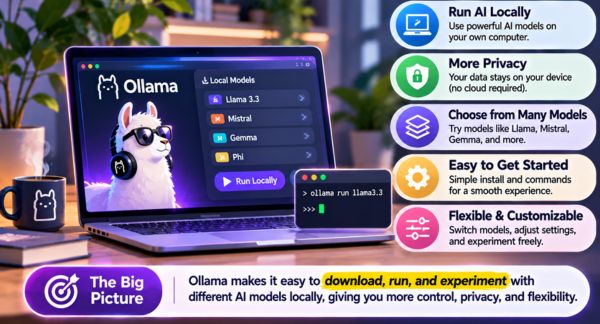
Running an AI model on your own computer sounds technical, but tools like Ollama make it approachable. The story of Ollama local AI, however, becomes more interesting when we look at everyday use. Ollama helps people run compatible AI models on their own computers. Rather than focusing only on dramatic demonstrations, it helps to understand the people, decisions and practical problems involved. That gives readers a clearer starting point for judging what matters.
The technology in plain language
Ollama helps people run compatible AI models on their own computers. Different users may get very different results, even when they are working with the same tool. It helps to see the process in action before making a judgement. The details of inputs and outputs can reveal whether a tool fits the intended task.
What everyday use can look like
A developer can test a local assistant without sending every prompt to a hosted model provider. What matters is whether it solves the problem someone actually has. A first-time user and an experienced professional may need very different things. Routine use introduces constraints that short demonstrations rarely show.
Why people are interested
Local experiments can improve control over latency, cost and some data flows. Saving a few minutes on something you do every day can add up. For teams, it may also affect how tasks are divided and checked. You often learn more after a week of use than after five minutes of testing. The right question is whether it solves a recurring problem without creating a more difficult one elsewhere. That perspective keeps the conversation tied to experience rather than promotion. Before accepting a broad claim, check its scope, intended audience and any stated conditions. Small distinctions can change what a result actually means.
Hardware memory, model size and system security affect the experience. Checking the official explanation against hands-on tests is a good starting point. An announced feature is not always available to use immediately. When personal information or important decisions are involved, caution matters.
The bigger picture
As conversations about Ollama local AI continue, it is worth keeping ordinary users at the centre. They need tools or ideas that fit real circumstances, not only ideal conditions. Ask what a typical person could do differently tomorrow and what they would still have to check. Those simple questions often lead to a more useful answer than any prediction about the distant future.