
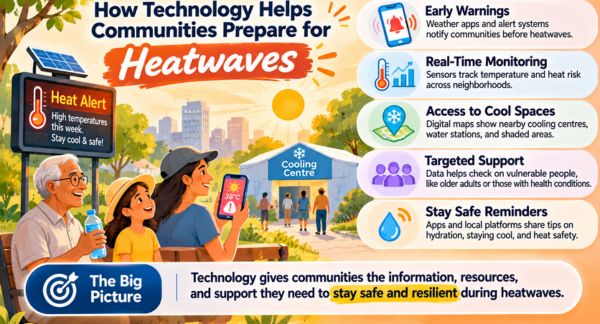
When temperatures rise for days, the problem goes well beyond feeling uncomfortable. heatwave technology. Heatwaves create risks for health, electricity demand, transport and urban life. For people encountering Heatwave for the first time, it helps to move past the first impression. It is how the idea works, what somebody could do with it and what should be checked before drawing a conclusion.
How the idea takes shape
Heatwaves create risks for health, electricity demand, transport and urban life. Its place in the bigger picture depends on how consistently this process works. A name on its own cannot explain whether the experience is genuinely useful. A clear account should show both the expected result and who has to verify it. A useful way to judge the topic is to compare the promise with what people can actually do today.
Putting the concept to work
Weather alerts, cooling maps and local support plans can help communities respond before temperatures peak. The example also brings the discussion closer to familiar routines. Whether it works well often depends on the conditions around the user. What looks effortless in a presentation can be more complicated during everyday work.
Why its appeal is growing
Data-informed planning makes it easier to identify vulnerable areas and services. Small everyday gains may matter more than a single dramatic demonstration. Businesses may discover better ways to respond to the people they serve. A strong claim is only useful when people can repeat the outcome. The right question is whether it solves a recurring problem without creating a more difficult one elsewhere. Before relying on a new feature, check what its maker actually says it can do. A feature that helps one person might offer little value to another. Asking what can be repeated is often more revealing than asking what looks impressive.
Limits that cannot be ignored
Forecasts are probabilistic and access to cooling is not equal for everyone. The strongest explanations make it clear where documented features end and predictions begin. Readers should watch for the gap between a prototype and a reliable public release. Sensitive situations call for extra attention to accuracy and accountability.
An idea worth watching
There is no need to decide straight away whether heatwave technology will change everything. Look first at practical demonstrations, who uses the result and how mistakes are handled. When the claimed benefit is clear and the limits are openly discussed, people can make better choices. That is the kind of progress worth following as the field develops.