
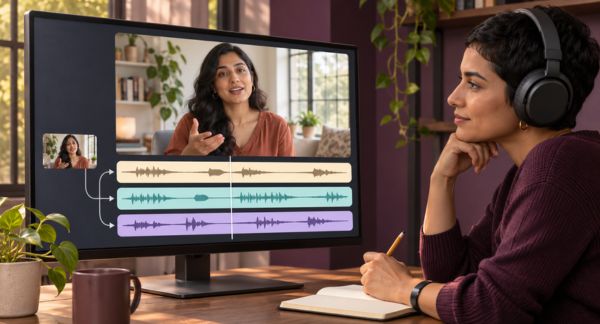
Recording a useful video takes effort. You plan the message, set up the camera and try to get the delivery right. Once it is finished, the next question is whether people who speak another language could benefit from it too. Our reel showed a dubbing workflow involving Claude and ElevenLabs, with the idea of turning one English recording into versions for different audiences. It is an appealing way to expand a video’s reach, provided the translated message still sounds natural to the people hearing it.
Start with audio that is easy to understand
Clear original speech makes the rest of the process easier. Record in a quiet space, avoid talking over background music and leave small pauses between ideas. If the video includes brand names, unusual words or local expressions, prepare a short reference list. AI tools can handle a great deal, but they work with what you give them. A recording with clipped words or overlapping speakers may lead to errors that are harder to fix after translation.
Connect the tools and test a short section
The script described linking an ElevenLabs creative integration to Claude, uploading the original audio and requesting a dubbed language. Available connections and supported workflows can change, so check the current setup instructions first. Begin with thirty seconds rather than an entire long video. Listen for the meaning, emotional tone and timing. An apparently smooth dub can still choose the wrong word or change the intended message. Short tests make problems easier to spot before you commit to a complete series.
Translation needs more than accuracy
A direct translation is not always the best version for a local audience. Jokes, examples and everyday phrases may need rewriting so they feel familiar. A video made for Chennai viewers might use references that are less meaningful elsewhere. Native speakers can help adjust these without losing the central idea. For educational and marketing content, a simple review by someone who understands both languages is one of the most valuable steps in the process.
One message, several audiences
Multilingual dubbing can be useful for training videos, product demonstrations and short lessons. It can also help creators test where their content connects before investing in a full localisation strategy. Numbers of supported languages, free credits and voice features vary by plan and may change, so confirm them before budgeting. The opportunity is real, but the best outcome is not the largest number of versions. It is a smaller set of carefully reviewed videos that people can enjoy and understand in their own language.