
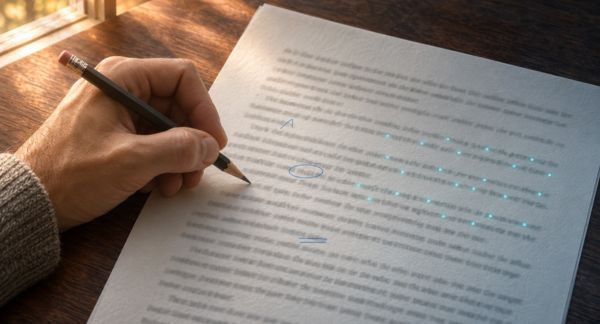
Suppose you write an article yourself, then ask an AI assistant to fix a few awkward sentences. Would it be fair for a detection system to label the finished piece as AI-written? That question was at the centre of our RepuNEXT TV reel about reports of invisible watermarking in Claude-generated text. The idea sounds straightforward: add a signal that software can recognise even when readers cannot see it. In practice, the relationship between AI assistance and authorship is more complicated. It is important to separate discussion of a proposed or reported technique from a confirmed feature available in every Claude model.
What an Invisible Text Watermark Would Mean
A text watermark does not have to appear as a visible label or an extra character. Some proposed approaches work by subtly influencing word choices so that a detector can look for a pattern across longer passages. That is different from proving who wrote a particular sentence. Detection may depend on the amount of text, how it was generated and whether it was edited later. Short excerpts and heavily revised passages can be difficult to assess. A watermark, even when correctly detected, needs careful interpretation.
Proofreading Is Not the Same as Writing
Consider a researcher who prepares an original explanation but uses Claude to improve grammar. The research, argument and evidence came from the person, while the software helped with presentation. Compare that with someone who asks an AI system to produce the entire article from a short instruction. Both involve AI, but not in the same way. A simple ‘AI or human’ label can hide those differences. For publishers and educators, clear rules about permitted assistance may be more useful than assuming one technical signal settles the question.
Rewriting Creates Another Challenge
The reel also mentioned discussions about rewriting tools and whether they could weaken a detectable signal. That is a reasonable concern for any method that relies on patterns in text. Normal editing might change those patterns too. A detection tool therefore should not be treated as unquestionable evidence of misconduct or dishonesty. False accusations can harm people, particularly when decisions affect grades, employment or professional reputation. Claims about a particular company’s watermarking rollout also require confirmation from trustworthy technical documentation.
Transparency Needs Context
More reliable information about how content was made can benefit readers, but technology alone cannot explain the role of every contributor. A good policy should distinguish original research, drafting, translation, proofreading and automated generation. Writers can document their process, and organisations can tell audiences what kinds of assistance they permit. Invisible watermarking may become one part of that picture, but it is unlikely to answer every question about authorship. The fairest approach is to look at the full context before drawing conclusions about who created a piece of work.